

Cultural road trip in the Dominican Republic: In the footsteps of Dominican history, museums, and architecture
While the Dominican Republic is globally renowned for its beachfront luxury resorts and paradisiacal coastlines, it also boasts an incredibly rich and unmatched historical heritage. It was right here, on the island of Hispaniola, that the modern history of the Americas truly began. The island is packed with genuine treasures, spanning from the very first colonial stones of the New World to groundbreaking 20th-century architectural masterpieces, monumental religious sanctuaries, and world-class museums safeguarding pre-Columbian artifacts.
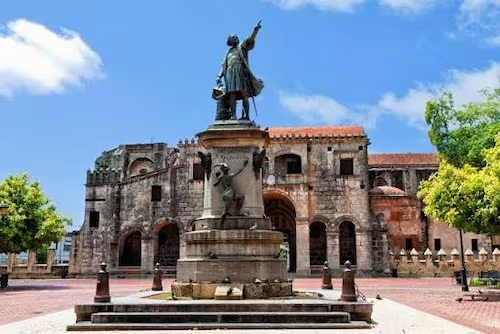
For travelers looking for an authentic cultural journey, discovering the island’s most prominent cultural heritage is an unforgettable adventure. And what better way to connect these architectural landmarks and galleries than with the total freedom of a self-driven road trip? Buckle up, set your GPS, and dive into our detailed itinerary carefully mapped out to guide you through the most important historic sites in the Dominican Republic.
Step 1: Santo Domingo, the cradle of the New World and its national museums
The ultimate starting point for your historical road trip begins exactly where history was written. After picking up your vehicle from one of our convenient Jumbo Car rental branches (either directly at the airport or in the downtown city center), make your way toward the capital's historic heart and premier museum hub.
↳ The colonial zone: An open-air museum
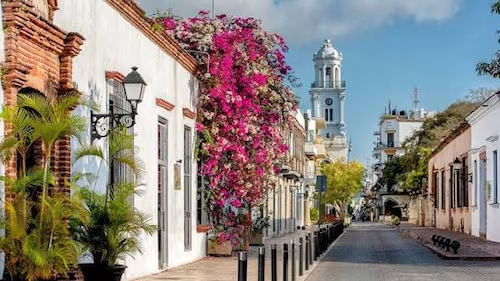
Listed as a UNESCO World Heritage site, the Zona Colonial preserves a unique concentration of historical "firsts." Park your vehicle safely in one of the monitored parking lots located on the edge of the district and explore its charming cobblestone streets on foot.
🚗 Parking Tip: Don’t try to park on the narrow streets. Use the 24/7 monitored parking lots on the outskirts, such as the Plaza de España underground parking lot or the José Reyes Street parking lot. The average rate is 50 to 100 DOP per hour (about 1 to 2 USD).
Explore its cobblestone streets on foot and discover its must-see landmarks:
The Alcázar de Colón: This fortified palace built in a striking Gothic-Mudéjar style was constructed by Diego Columbus (the son of Christopher Columbus) and majestically overlooks the Plaza de España.
Hours: Tuesday through Sunday, 9:00 a.m. to 5:00 p.m.
Admission: 150 DOP (about 2.50 USD), audio guide included.
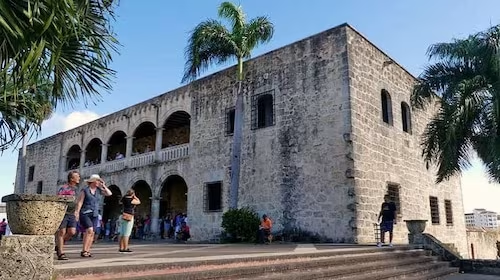
The cathedral of Santa María la Menor (Catedral Primada de América): The very first cathedral built in the Americas, showcasing a breathtaking architectural blend of late Gothic and Spanish Renaissance elements.
Hours: Monday through Saturday, 9:00 a.m. to 4:00 p.m.
Admission: Free (voluntary donations for maintenance are appreciated).
Important information: Strict dress code. Shoulders and knees must be covered (shorts and tank tops are not permitted).
Calle Las Damas: The oldest paved street in the New World, named after the Spanish court ladies who used to stroll along its stones during the 16th century.
The museum of the Royal Houses (museo de las Casas Reales): Situated just a short walk away, this grand 16th-century palace served as the administrative seat of the Spanish Royal Court. Its exhibition rooms feature historical armor, ancient navigation maps, and sunken treasures recovered from old Spanish galleons.
Hours: Tuesday through Sunday, 9:00 a.m. to 5:00 p.m.
Admission: 100 DOP (about 1.70 USD).
The museum of the Royal Atarazanas (MAR): This ultra-modern naval museum is housed inside beautifully restored colonial maritime warehouses and displays the finest collection of underwater archaeology in the entire Caribbean.
Hours: Tuesday through Sunday, 9:00 a.m. to 5:00 p.m.
Admission: 200 DOP (about 3.30 USD).
↳ Plaza de la cultura: The modern museum hub
Hop back behind the wheel of your rental car, leave the old colonial walls behind, and drive a few minutes over to the green neighborhood of Gascue. Here you will find the Plaza de la Cultura, a spacious park complex gathering the country's major cultural institutions.
🚗 Parking tip: The complex has a large outdoor parking lot that is free and secured by security guards at the main entrance (Avenue Máximo Gómez).
The national museum of history and geography: Newly renovated, this museum is an absolute must-visit to understand the political and social evolution of the country, ranging from pre-Columbian eras to rare artifacts from the Trujillo dictatorship.
Hours: Tuesday through Sunday, 9:00 a.m. to 5:00 p.m.
Admission: 100 DOP (about 1.70 USD)
The museum of the Dominican Man (Museo del Hombre Dominicano): The quintessential sanctuary for studying the island’s anthropological identity, highlighting Taíno Indian heritage and profound African influences through an extraordinary collection of traditional carnival masks.
Hours: Tuesday through Sunday, 9:00 a.m. to 5:00 p.m.
Admission: 100 DOP (about 1.70 USD).
The Museum of Modern Art (MAM): A perfect stop for art enthusiasts, displaying a spectacular lineup of works by the most celebrated contemporary Dominican painters and sculptors.
Hours: Tuesday through Sunday, 9:00 a.m. to 5:00 p.m.
Admission: 150 DOP (about 2.50 USD).
Step 2: The eastern region – architecture, sacred traditions, and stone villages
Hit the road heading east via the Autovía del Este. This modern, smooth highway is perfectly suited for a comfortable drive in a rental sedan or SUV, leading you straight toward globally unique architectural wonders.
↳ Altos de Chavón (La Romana): The Mediterranean Illusion
Park your vehicle in La Romana to explore a truly astonishing site. Altos de Chavón is a detailed replica of a 16th-century Mediterranean artisan village, beautifully perched high above the scenic Chavón River. Designed in the 1970s by an Italian filmmaker and hand-carved entirely out of local coral stone, this complex stands as a premier cultural landmark.
Site hours: Open daily from 8:00 a.m. to 10:00 p.m. (the Archaeological Museum closes at 5:00 p.m.).
Admission fee: Access to the village requires the purchase of an admission pass for the Casa de Campo complex, priced at 25 USD per adult (free for children under 12). This pass includes access to the village, the amphitheater, and the museum.
🚗 Parking tip: A huge, free, and secure outdoor parking lot is available at the pedestrian entrance to Altos de Chavón.
The village features an impressive 5,000-seat Grecian-style outdoor amphitheater (famously inaugurated by Frank Sinatra) and houses the Regional Museum of Archaeology. This museum hosts one of the world's most complete and comprehensive collections on indigenous Taíno culture, showcasing thousands of exceptionally well-preserved pre-Columbian pottery pieces, tools, and ritual artifacts.
↳ The basilica of Our Lady of Altagracia (Higüey): The pinnacle of sacred architecture
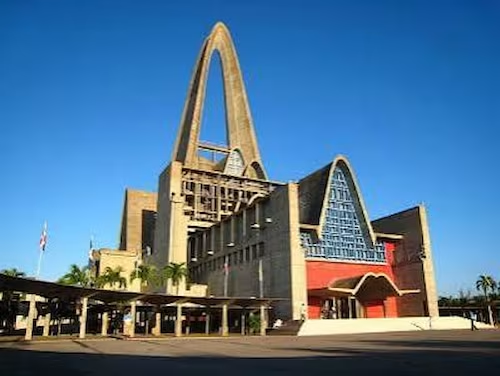
Continue your drive eastward to the bustling city of Higüey. The urban landscape is spectacularly dominated by a monumental, raw concrete structure: the basilica of Our Lady of Altagracia, a renowned spiritual pilgrimage site and the most important religious monument in the nation.
Hours: Open daily from 8:00 a.m. to 6:00 p.m.
Admission: Admission is completely free.
Important information: Modest attire is required (no bare legs or bare shoulders). Local guides at the entrance sometimes offer sarongs for rent for a few pesos.
🚗 Parking Tip: The basilica has a huge, enclosed, and free parking lot right in front of the building, which is very easy to access with your SUV.
Inaugurated in 1971, this modern architectural masterpiece stands out with its massive, soaring 226-foot (69-meter) concrete arch designed to symbolize hands joined together in prayer. Inside, stunning stained-glass windows imported from France cast a vibrant, multicolored glow over the main altar, which beautifully enshrines the sacred painting of the Virgin of Altagracia, the spiritual protector of the Dominican people. This stop offers a powerful, immersive look into local faith and contemporary design.
↳ The cave of wonders (cueva de las maravillas)
While driving along the eastern route toward La Romana, making a stop at this spectacular underground cave system is an absolute must. Long before European ships reached these shores, the native Taíno Indians used these rock walls to leave behind hundreds of well-preserved petroglyphs and cave paintings. It remains one of the most intriguing historic sites in the Dominican Republic for understanding pre-Columbian life and art.
Hours: Tuesday through Sunday (and on Mondays that are public holidays), from 9:00 a.m. to 5:00 p.m.
Admission: 300 DOP for adults (approximately 5 USD) and 100 DOP for children. Visitors must be accompanied by a local park guide (included in the price; tips are appreciated).
🚗 Parking tip: The national park complex has a paved, shaded, and fully secure parking lot included with admission.
Step 3: The north coast – historic fortresses and living traditions in Puerto Plata
Steer your rental car northbound via the main highway to reach the gorgeous Atlantic Coast. This long cross-country drive is the perfect opportunity to fully appreciate the premium comfort, performance, and reliability of your Jumbo Car vehicle.
↳ Puerto Plata: Colonial defense and the splendor of amber
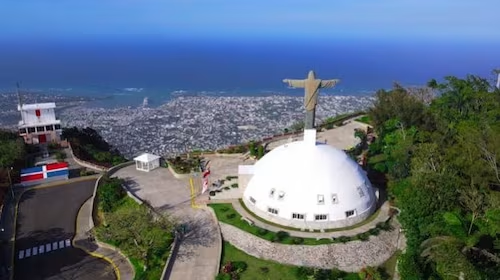
Puerto Plata stands out as one of the most historically rich and architecturally diverse cities on the island.
The San Felipe fortress (fortaleza San Felipe): This massive 16th-century stone military fort was strategically erected to safeguard the coastline against heavy raids by English and French pirates. Its thick ramparts and historic cannons still face out to the open ocean, serving as a powerful monument to colonial Spanish military strategy.
Hours: Monday through Friday from 9:00 a.m. to 5:00 p.m., Saturday and Sunday from 9:00 a.m. to 4:00 p.m.
Admission: 150 DOP (approximately 2.50 USD), including an audio guide available in multiple languages.
🚗 Parking tip: A large, free public parking lot surrounds La Puntilla Park at the foot of the fortress.
The amber museum: Located right in the heart of town within a magnificent 19th-century Victorian-style mansion, the amber museum in Puerto Plata enjoys worldwide renown. The Dominican Republic is home to some of the clearest, most transparent amber on earth. The museum displays rare prehistoric specimens trapping ancient insects, plant leaves, and even small fossilized lizards perfectly preserved inside the golden resin from millions of years ago.
Hours: Monday through Saturday, 9:00 a.m. to 5:00 p.m.
Admission: 200 DOP or 4 USD per adult.
🚗 Parking Tip: Parking is available on the streets adjacent to the historic center. Look for authorized blue parking spaces or ask the street attendants (parqueadores) for help in exchange for a small fee of 50 DOP.
↳ Handcrafted cigar factories: The living heritage of Puerto Plata
You simply cannot experience the North Coast without immersing yourself in one of the country's most celebrated economic and cultural legacies: tobacco craftsmanship. While the neighboring Santiago valley serves as the agricultural heartland, the historic coast of Puerto Plata hosts acclaimed boutique factories that are incredibly easy to visit by car.
By stopping at reputable boutique operations like Espigón Cigars or visiting the traditional workshops nestled in the historic center, you can witness the intricate art of hand-rolling cigars firsthand. Master rollers (tabaqueros) enthusiastically share their generational skills, which have remained virtually unchanged for centuries. You will learn to recognize the differences between tripa (filler), capote (binder), and capa (wrapper) leaves, discovering exactly why Dominican premium cigars are widely ranked among the absolute best in the world today. It makes for an enriching sensory and cultural break on your road trip.
Hours: Generally open Monday through Saturday from 9:00 a.m. to 6:00 p.m.
Admission: Tours of the workshops and demonstrations are free at most factory outlets (since the goal is to sell products on-site). Personalized introductory rolling workshops may require a fee and must be reserved in advance (approximately 20–30 USD).
4. Why a rental car is essential for this cultural road trip
Connecting destinations as geographically diverse and spread out as the urban museums of Santo Domingo, the remote village of Altos de Chavón in La Romana, and the artisan cigar workshops of Puerto Plata is virtually impossible to pull off using traditional public transportation in just a few days.
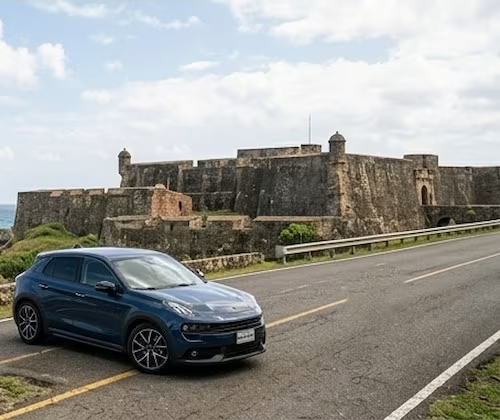
↳ Complete freedom to design your perfect schedule
Having your own Jumbo Car vehicle completely frees you from the strict schedules, crowded buses, and rigid routes of organized tour groups. You have the luxury to spend your entire morning analyzing pre-Columbian relics inside the Altos de Chavón Archaeological Museum, enjoy a relaxed lunch overlooking the river canyon, and effortlessly drive down to the Higüey Basilica just in time to catch the late afternoon sun streaming colorfully through its monumental stained-glass windows.
↳ Which vehicle is best suited for this complete itinerary?
Because this expansive July road trip covers hundreds of miles and handles highly varied driving environments—ranging from flat, open eastern highways to busy urban streets in Santo Domingo and winding hillsides in the North—a compact or intermediate SUV (such as a Hyundai Tucson or Kia Sportage) offers the ideal balance. Its elevated ride height provides excellent road visibility to enjoy the passing landscapes, while its spacious, air-conditioned cabin ensures top-tier comfort and luxury for all passengers and luggage.
🚗 Explore dominican heritage with complete freedom
Do not miss out on the incredible opportunity to uncover the country's deep cultural wealth, sacred monuments, and world-class museums this July. Secure your ideal vehicle today.
5. FAQ: Expert tips for a successful cultural road trip in the DR
What are the specific dress code rules for visiting religious sites in the Dominican Republic?
To step inside the First Cathedral of Santo Domingo and the Basilica of Our Lady of Altagracia in Higüey, a respectful dress code is strictly enforced. Short shorts, sleeveless tank tops, and skirts ending above the knee are generally turned away at the entrance doors. We highly recommend keeping a light, versatile clothing layer (like a sarong, wrap scarf, or lightweight linen pants) inside the trunk of your Jumbo Car vehicle just in case.
Do museums and historic landmarks provide secure parking spaces in the Dominican Republic?
Yes, absolutely. Renowned cultural sites like Altos de Chavón, the Cave of Wonders, the Amber Museum in Puerto Plata, and the Higüey Basilica all feature large, dedicated, well-monitored on-site parking lots that are easily accessible for cars and SUVs. When exploring downtown Santo Domingo, we strongly advise utilizing the secure, paid underground parking structures located directly around the Colonial Zone or right at the Plaza de la Cultura.
What are the typical operating hours for national monuments in the Dominican Republic?
The vast majority of state-run national museums and historical parks managed by the Ministry of Culture operate from Tuesday through Sunday, generally opening from 9:00 AM to 5:00 PM. Make sure to map out your driving stages with this in mind, as almost all public cultural sites remain closed on Mondays for weekly maintenance and upkeep.