

Discover the Samaná region of the Dominican Republic: The complete travel and driving guide
Santa Bárbara de Samaná is much more than just a stopover. This town boasts pastel-colored houses and a majestic bay. It is the true heart of the peninsula. While many travelers simply pass through on their way to nearby beach resorts, those who stop here discover a gem of authenticity. With its marina, vibrant local markets, pristine beaches, natural wonders and lush green hills overlooking the ocean, the city offers striking contrasts.
But be warned: To truly capture the magic of the surroundings, having your own set of wheels is your best bet. Discover why exploring Samaná by car is the best-kept secret for an authentic Dominican Republic experience.
How to get to Samaná: Best routes from Santo Domingo
Traveling from Santo Domingo to the provincial capital is a visual adventure in itself. You'll leave the urban hustle and bustle of the capital behind and venture deeper into increasingly wild nature. You'll pass through rice fields stretching as far as the eye can see and protected wetlands.
From Santo Domingo to Samaná: The northeast highway route
The most direct and safest route from Santo Domingo to Samaná is the Northeast Highway (Route 7). This modern highway was built to open up the peninsula and cuts across the island from south to north through Los Haitises National Park. The scenery is spectacular. You will drive through dense tropical vegetation where the peaks of mogotes (limestone hills) pierce the morning mist. Once you reach the Nagua intersection, turn east to follow the coast of Samaná Bay and catch your first glimpse of the Atlantic.
Budget and tolls: Plan ahead for a stress-free drive
The road to Samaná is the best-maintained, but also the most expensive, in the country. For a one-way trip between Santo Domingo and Santa Bárbara de Samaná, budget approximately 1,100 Dominican pesos.
The freedom advantage: Paso rápido
Using the Paso Rápido pass is highly recommended to avoid lines and travel more comfortably. This electronic toll system allows you to pass through toll gates via the green lanes without handling cash.
You can easily top up your balance in seconds via the Paso Rápido mobile app or, even more conveniently, through WhatsApp. Send a simple message to credit your account and continue your journey seamlessly.
Many of our vehicles at Jumbo Car are already equipped with this system to ensure a smooth experience from the moment you leave the rental office.
Manual payment
If you’re not using Paso Rápido, be careful. Toll booths on this route only accept cash in dominican pesos. Credit cards, U.S. dollars, and euros are always refused.
Important tip: Be sure to exchange currency or withdraw cash before leaving Santo Domingo, as ATMs are scarce along the highway. For precise route calculations, check out our comprehensive guide to tolls and gas on the road to Samaná.
Strategic stops: Eating, drinking, and traveling with pets
The trip takes about 2 hours and 45 minutes, but a few well-chosen stops can transform your journey into a relaxing experience.
Dona Pula: Located just before the highway entrance, this is the go-to spot for a hearty Dominican breakfast. Try their famous cassava empanadas or crispy chicharrón to fuel up.
Texaco and Sunix stations: Halfway along the route, you’ll find ultra-modern gas stations. Their shops offer quality coffee and imported snacks.
Pet break: If you’re traveling with your dog, the Texaco stations along this route are ideal. They have grassy areas and open spaces away from the pumps where your pets can safely stretch their legs. A bowl of fresh water is often available.
Choosing a vehicle: Do you need a 4x4?
While downtown Samaná is easily navigable in a small car, the terrain changes dramatically as soon as you leave the city center.
The city is surrounded by hills with steep slopes. To reach panoramic viewpoints, remote hiking trails, or eco-lodges nestled in the jungle, we recommend renting a 4x4.
An SUV will provide the power needed for the climbs and the ground clearance required for the dirt roads leading to hidden beaches.
Things to do in Samaná — everything's better with a rental car
Having your own vehicle in Santa Bárbara de Samaná is a game changer. You won't be at the mercy of the "guaguas" (local buses) or high tourist taxi prices anymore.
Santa Bárbara de Samaná: A colorful fishing village
A visit to Santa Bárbara de Samaná offers an opportunity to experience the vibrant essence of the peninsula. Unlike the cookie-cutter atmosphere of the hotel zones, the village has managed to preserve its authentic character. What is its visual signature? The Pueblo Príncipe, a cluster of wooden houses with Victorian architecture and colorful facades (canary yellow, turquoise blue, and fuchsia pink) that line the bay.

The Malecón is the heart of local life. The waterfront is the perfect place to park your Jumbo Car and take a stroll. Among the café terraces and small restaurants, you'll find fishermen unloading their daily catch and local artisans. This is where you can truly experience the Dominican "slow life."
The municipal market: An explosion of flavors. Drive a few minutes toward the village center to visit the market. It’s time to fill your cooler with fresh tropical fruits, such as mangoes and passion fruit, and discover local spices. The aroma of roasted coffee and cocoa fills the narrow streets, offering total sensory immersion.
A multicultural history: Samaná has a unique identity within the Dominican Republic. This identity is partly due to the descendants of freed slaves who came from the United States in the 19th century. Evidence of this influence can be seen today in the local cuisine, which makes liberal use of coconut, and in some of the village’s historic Protestant churches, such as “La Churcha.”
Parking tip: The Malecón offers large, secure parking areas. It’s the perfect place to start exploring the town on foot before heading up to the hills or national parks.
Humpback whale-watching season (January–March): The advantage of mobility
Every year, from January through March, the bay is home to a unique natural phenomenon: the migration of humpback whales.
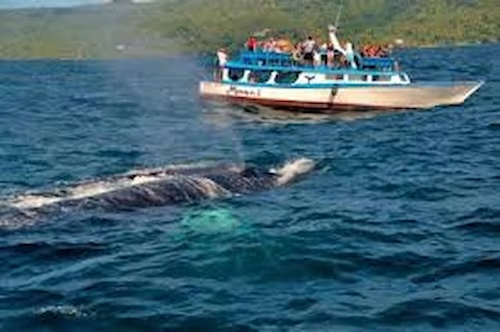
Having a car is key because excursions leave early. If you stay in town or on the hillside, you can drive to the marina as early as 8:00 a.m., allowing you to negotiate directly with local captains or certified tour operators before the crowded buses from Punta Cana arrive. Read our guide to whale watching in Samaná to maximize your chances of seeing whales.
The Samaná bridges (Los Puentes): A walk and photography
Built in the 1970s, this series of pedestrian suspension bridges connects the Malecón to several uninhabited islets, including Cayo Linares and Cayo Vigía.

The experience: Park your car in the secure parking lot on the Malecón (waterfront). Walk across the bridges, preferably in the late afternoon. The setting sun over the bay and the surrounding hills creates exceptional lighting. It’s the perfect spot for a peaceful walk away from engine noise, offering breathtaking views of the fishing fleet.
Los Haitises National Park: An immersion in the "Sanctuary of the Taínos"
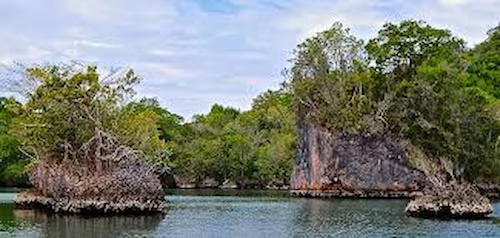
Los Haitises National Park is a true ecological and historical sanctuary and one of the most spectacular landscapes in the Caribbean. The name Los Haitises, which means "mountainous land" in the Amerindian language, perfectly describes this labyrinth of mogotes—30-meter-high limestone hills rising from the turquoise waters of the bay. Over time, nature has reclaimed its rightful place here.
Biodiversity and a millennia-old history
Exploration is primarily by sea, winding through impenetrable mangrove forests that serve as a refuge for exceptional birdlife. Birdwatchers will be in paradise here, where they can observe magnificent frigatebirds, brown pelicans, and gray herons nesting on rocky islets up close.
The park is also an open-air history book. As you venture into mystical caves such as Cueva de la Arena or Cueva de la Línea, you’ll discover authentic petroglyphs and pictograms. These pre-Columbian works of art, left by the Taíno people centuries ago, bear witness to the sacred nature of this place for the island’s first inhabitants.
The strategic advantage of your Jumbo Car
Most travelers opt for “all-inclusive” excursions departing from their hotels. These excursions often involve long bus rides and rigid group schedules. Having your own vehicle can completely transform the experience.
Choose the dock: You can drive to the port of Santa Bárbara de Samaná, but the real insider's secret is to continue on to Sabana de la Mar via a scenic route. From there, you’ll reach the Caño Hondo dock, which is located right at the park’s entrance.
You can arrive as early as 8:00 a.m. and beat the catamarans full of tourists to the spot. You can enjoy the absolute silence of the mangrove, broken only by birds' cries, which offers a mystical atmosphere that tour groups will never experience.
Negotiate on the spot: At the port, you can negotiate directly with a local captain for your boat. This allows you to customize your itinerary. Spend more time in a specific cave, or ask the captain to turn off the engine and drift silently through the mangrove channels.
Jumbo Car driving tips
The road to Sabana de la Mar winds through picturesque farmland, though it may be somewhat rough in places. For this trip, a sport utility vehicle (SUV) with good suspension is ideal for absorbing road bumps and ensuring a comfortable ride.
Cabo Cabrón National Park: The ultimate adventure for explorers
While Los Haitises is a sanctuary for mangroves, Cabo Cabrón is home to vertiginous cliffs. Located at the northeastern tip of the peninsula between Samaná and Las Galeras, this national park is one of the least visited in the country due to limited access. Here, the Dominican Republic reveals its rawest and most spectacular side.
The park's landscape is like nothing else on earth. It is characterized by black limestone cliffs that plunge steeply into the Atlantic, creating a striking contrast with the deep blue of the ocean. It is an exceptional playground for seasoned hikers and solitude seekers. You’ll find steep trails leading to viewpoints where you’ll feel like you’re alone in the world.
Although Playa Frontón is often reached by boat, the trail to it lies at the foot of the Cabo Cabrón cliffs. The demanding hike offers panoramic views that boat tourists will never see.
Thanks to the height of the cliffs, Cabo Cabrón is one of the few places where you can watch humpback whales spout from land (in season) without boarding a boat.
Why the Jumbo Car 4x4 Is a must-have here
Accessing the park’s buffer zone and trailheads is no easy feat. The road quickly turns into a rough dirt track strewn with rocks and, after rain, muddy patches.
A standard city car won’t be able to navigate the obstacles on the trail leading to the park entrance due to a lack of ground clearance and traction. To avoid getting stuck, renting a 4x4 is an absolute must for the Samaná Peninsula.
You'll have total independence because there is no public transportation serving this area. Having your own off-road vehicle allows you to bring all your hiking gear, water, and a picnic for a full day of total immersion.
Safety: The slopes are steep. The engine power and braking system of a recent SUV from the Jumbo Car fleet guarantee a safe descent back to Santa Bárbara de Samaná after your adventure.
Expert tip: supplies
There are no amenities (bars or shops) in Cabo Cabrón Park. Before leaving Samaná, stop at the Sunix gas station to fill up on fuel and pack as much water and food as possible in your cooler. This is an expedition that requires thorough preparation!
Hiking, waterfalls, and adrenaline await you on a wild adventure starting from Samaná
Santa Bárbara de Samaná is the perfect home base for nature lovers. With your own vehicle, you won't be limited to the usual routes. You can reach trailheads at dawn and continue your adrenaline-fueled adventures until sunset.
El Limón Waterfall: The jewel of the sierra
This 40-meter waterfall, located about a 20-minute drive north of the city, is a must-see.
One advantage of driving yourself is that organized tours all arrive at the same spot. Driving yourself allows you to choose your own "parada" (starting point).
We recommend the Parada de la Cascade or the Parada Franklin for more authentic, less crowded trails. You're in control of your time. Stay an extra hour to swim in the cool pool without worrying about the group leaving.
The access road is perfectly paved, and there is easy parking at the paradas.
Zip-lining and tree-top adventure in Juana Vicenta
Don’t miss zip line adventures, located in the hills above Juana Vicenta (15 minutes from Samaná), if you're a thrill-seeker.
This is one of the most spectacular zip-line courses in the Caribbean. Glide over the canopy on 12 cables and enjoy a bird’s-eye view of Samaná Bay and Cayo Levantado Island.
You will need a car to get there because the site is located at the top of a steep hill. Without a car, it's expensive to get there by taxi. A Jumbo Car SUV can climb the hill effortlessly to offer you this breathtaking panorama.
Hikes to hidden pristine beaches: Ermitaño and Onda
Here, your freedom to explore truly comes into its own. Samaná has coves that are only accessible after an immersive hike through the jungle.
To reach Playa Ermitaño I & II, park your car at the end of the coastal road east of town. A 45-minute hike from there will take you to these two completely wild, paradise-like beaches. Surrounded by dense jungle and limestone cliffs, you’ll feel like an explorer.
Playa Onda is a shorter but equally rewarding hike. The trail winds through coconut palms before opening up to a small, secluded cove where golden sand contrasts with the deep blue of the Atlantic Ocean.
Legendary beautiful beaches: Playa Rincón and playa El Valle
From Santa Bárbara de Samaná, you can access two of the most famous scenic spots in the Dominican Republic:
Playa Rincón : It's a 45-minute scenic drive through traditional villages. This 5-kilometer stretch of wild, white-sand beach is unspoiled. At the far left end, the Caño Frío River offers cool, crystal-clear freshwater. With a rental car, you can explore both ends of the beautiful beach, which tour boats never do due to time constraints.
Playa El Valle : is just 20 minutes north of the city. The beautiful, winding road passes through coffee and cacao plantations. Once you arrive, you’ll discover a beach nestled between two spectacular mountains worthy of a Jurassic Park setting.
Note: The last kilometer leading to the shore can be muddy and sandy, especially after a tropical downpour. Renting a 4x4 for the Samaná Peninsula is your best bet for ensuring smooth access.
Playa Morón and the pirates' trail
West of El Valle lies Playa Morón, a historic beach where old French cannons still line the shore. The coastal hike connects several small, secluded coves. Limited car access makes this a true haven of peace for those who can get there on their own.
Other hidden hikes: Get off the beaten path
While El Limón Waterfall is the region’s star attraction, other trails offer a chance to fully immerse yourself in the local biodiversity without encountering other travelers.
Cascada Lulu: El Valle’s “secret” waterfall
Just a 20-minute drive from Samaná, heading toward Playa El Valle, lies Cascada Lulu.
The experience: Much less crowded than El Limón, this seven-meter waterfall plunges into a crystal-clear pool surrounded by a dense jungle of ferns and coffee trees.
An added bonus is that the trail includes crossing a very photogenic suspension bridge. It’s an easy hike, ideal for families.
To access the waterfall, park your car near the trailhead on the road to El Valle. An SUV is recommended, as the secondary road can be slippery.
The six beaches trail (hike to playa Ermitaño)
Starting from the El Limón area, which is a 25-minute drive from Samaná, you can begin the Ruta de las Playas Vírgenes.
The route: This three- to four-hour hike takes you through tropical fruit plantations and over cliffs to the following beaches, in succession: Playa Morón, Playa Lanza del Norte, Playa Las Cañas, Playa Honda, and finally, Playa Ermitaño 1 and 2.
Logistical tip: Park your car at Playa Morón. You can walk there and negotiate with a local fisherman for a boat ride back to your vehicle—a memorable way to see the coast.
Cayo La Farola and El Tutu lookout
This site is located on a small island just a few minutes by boat from the Simi Báez pier and 10 minutes from town. It features a unique nature trail.
The 45-minute hike takes you past more than 75 species of native plants before reaching the El Tutu Lookout.
The reward is a 360-degree view of the entire Samaná Bay. During the whale-watching season (January–March), it’s a prime land-based vantage point for spotting humpback whales' blowholes, all without boarding a boat.
Hike to the Mirador de la Bahía (Montaña Vieja)
Experienced hikers can choose from several trails that start from the hills above Santa Bárbara in the Juana Vicenta area.
The challenge is a steep climb through yam and coconut fields that leads to ridges with sweeping views of the marina and Samaná's bridges.
A car can help by allowing you to drive as high as possible on the paved roads before starting the hike, saving you from walking on asphalt under the sun.
The best seafood restaurants: Where to enjoy grilled fish after a day out?
Nothing tops a morning of hiking or swimming quite like having lunch with your feet in the sand. In Samaná, the culinary experience is inseparable from the sea. Here are our top picks for a meal after your adventures:
1. Restaurants in Playa Rincón: A feast by the Caño Frío
After exploring the five-kilometer-long beach, head to the western end where the Caño Frío River meets the sea.
The experience: Several small open-air restaurants serve the day's catch. The process is simple. You choose your fish, often red snapper or sea bream, which is displayed on ice.
The signature dish: Samaná-style fish (pescado con coco). The fish is grilled and topped with a creamy sauce made from coconut milk, ginger, and garlic. It is served with tostones (fried plantains) and rice and beans (moro).
Having a car is ideal because these restaurants are located away from the main parking lots. With your Jumbo Car SUV, you can park as close as possible to the tables shaded by almond trees.
2. El Valle: Rustic, authentic cuisine
The atmosphere at Playa El Valle is more rugged and "Robinson Crusoe"-style.
Where should you eat? Try Josefina's or one of the small driftwood huts along the beach. There are no printed menus here—you eat whatever the fishermen brought in that morning.
The highlight is the wood-fired grilled lobster (in season). The combination of the smoky flavor and the fresh seafood is unmatched.
Pro tip: Order your meal as soon as you arrive at the beach, then head out on your hike to Cascada Lulu. When you return, your table will be set, and your fish will be perfectly grilled.
3. El Limón: A refreshing break after the waterfall
After hiking to and from El Limón Waterfall, you'll be hungry.
The Paradas: Most trailheads, such as Parada Franklin and Parada de la Cascade, offer traditional buffets, which are either included in the price or available for an additional fee.
The menu: This is where you’ll enjoy the best Bandera Dominicana (rice, beans, meat, and fish), cooked over a wood fire in large cast-iron pots. The flavor is radically different from what you’ll find in the city.
4. Santa Bárbara: Dinner on the Malecón
After crossing the Samaná bridges, stay in town to end the day.
For dinner, try the Tierra y Mar restaurant or the small "frituras" stands along the waterfront.
A must-try is lambí (conch), either grilled or in a salad. It’s a highly prized local specialty that requires expertise to prepare properly.
💡 Tips for dining by the sea
Price: Always ask if the price is by weight or per piece before ordering to avoid surprises. Expect to pay between 600 and 1,200 DOP for a full fish meal.
Waiting time: In the Dominican Republic, meals are prepared to order. Plan for a wait of 30 to 45 minutes. It's the perfect time for one last swim!
Drinks: Pair your fish with a cold “Presidente” (local beer) or fresh passion fruit juice.
Are you ready to combine adventure and fine dining? Reserve your vehicle and prepare your taste buds for the best of Samaná.
Are you ready to explore the secrets of the bay? Don't let a tour group dictate your pace. Take the keys to your freedom!
