
Driving in the Dominican Republic in 2026: Complete Guide for Foreign Drivers, Licenses, Road Rules, and Car Rental Tips
Essential Information Before Driving in the Dominican Republic
Yes, tourists can legally drive in the Dominican Republic, but defensive driving, patience, and avoiding nighttime driving are strongly recommended.
In 2026, most foreign visitors can drive with a valid driver’s license from their home country for up to 90 days while visiting as tourists.
An International Driving Permit (IDP) is not always mandatory, but it is highly recommended for insurance purposes and police checkpoints.
Major highways connecting Santo Domingo, Punta Cana, Samaná, Santiago, La Romana, and Puerto Plata are generally in good condition.
Secondary roads may include potholes, speed bumps, motorcycles, animals, and inconsistent signage.
Renting a car with full insurance coverage is highly recommended to avoid unexpected expenses.
Before signing a rental agreement, travelers should carefully review deposits, deductibles, insurance coverage, and fuel policies.
Many international visitors choose experienced local companies such as Jumbo Car Dominican Republic for transparent rental conditions, modern fleets, and airport pickup services throughout the country.
Why Driving in the Dominican Republic Is the Best Way to Explore the Island
The Dominican Republic is far more than Punta Cana resorts and all-inclusive hotels. The country offers mountains, colonial cities, hidden beaches, waterfalls, national parks, and scenic coastal roads that are much easier to explore with a rental car.
Destinations such as:
Santo Domingo
Punta Cana
Samaná
Puerto Plata
Jarabacoa
Constanza
La Romana
Bayahibe
Bahía de las Águilas
They are significantly easier to visit independently when you have your own vehicle.
Public transportation exists, but it is not always practical for tourists who want flexibility, comfort, and the ability to stop wherever they want.
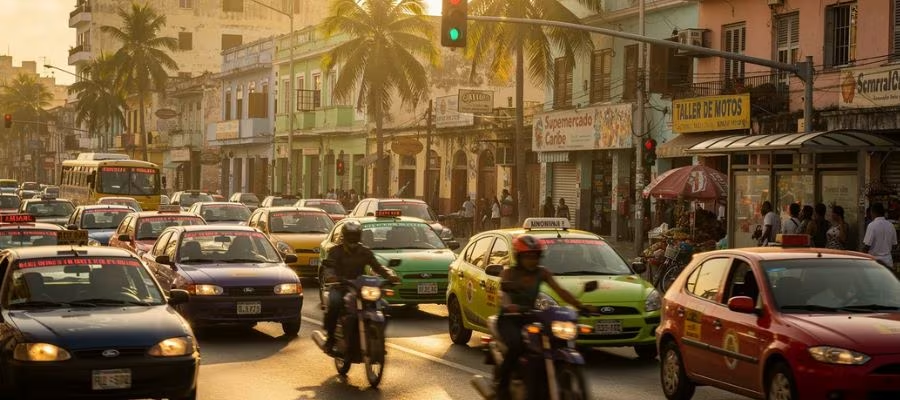
Driving in the Dominican Republic, however, can feel very different from driving in Europe, Canada, or the United States. Traffic patterns are more dynamic, motorcycles are everywhere, and local driving habits may initially seem chaotic.
Still, thousands of tourists successfully drive across the country every year.
With proper preparation, the right insurance, and realistic expectations, driving in the Dominican Republic can become one of the highlights of your trip.
Many travelers prefer working with established local rental providers such as Jumbo Car Dominican Republic because local expertise often makes a major difference when navigating Dominican roads.
Can Foreigners Drive in the Dominican Republic?
Is Your Foreign Driver’s License Valid?
Yes.
Tourists are generally allowed to drive in the Dominican Republic using a valid driver’s license from their home country for up to 90 days after arrival.
This applies to visitors from:
The United States
Canada
Spain
France
Germany
The UK
Latin America
Most European countries
Your license must:
Be valid and unexpired
Match the primary driver on the rental agreement
Be presented alongside your passport
Is an International Driving Permit Required?
An International Driving Permit (IDP) is not always legally required, but it is highly recommended.
Why?
Because it can help in situations involving:
Police checkpoints
Insurance claims
Rental companies
Language barriers
Accidents
An IDP is especially useful if your original license is not written in the Latin alphabet.
Minimum Age to Rent a Car
Most rental companies require drivers to be:
At least 21 years old
In possession of a valid license for at least 1–2 years
Drivers under 25 years old may need to pay a young driver surcharge.
Required Documents to Rent a Car in the Dominican Republic
Most agencies require the following:
Passport
Valid driver’s license
Credit card in the main driver’s name
Reservation confirmation
Sometimes proof of return travel
Before traveling, verify whether your credit card has enough available limit for the security deposit.
Renting a Car in the Dominican Republic: Step-by-Step Guide
How the Reservation Process Works
Booking a rental vehicle is relatively straightforward.
Typical process:
Select travel dates
Choose pickup location
Select vehicle category
Review insurance options
Confirm the reservation online
Present documents at pickup
The main airport pickup locations include:
Punta Cana International Airport (PUJ)
Las Américas International Airport in Santo Domingo (SDQ)
Puerto Plata Airport (POP)
Santiago Airport (STI)
Many travelers prefer booking directly through official local company websites to avoid hidden fees or unclear policies.
For this reason, experienced providers like Jumbo Car Dominican Republic are often selected by visitors looking for transparent pricing and local support.
Important Vehicle Inspection Before Leaving the Rental Office
Before driving away:
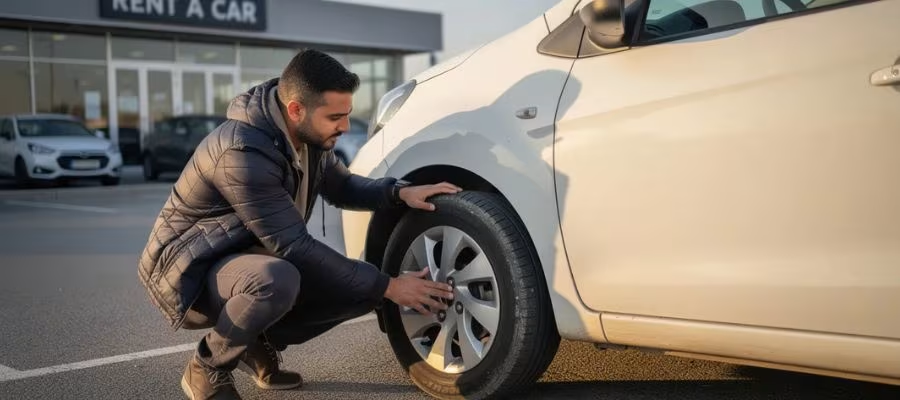
Take Photos of the Vehicle
Photograph:
Exterior panels
Tires
Windshield
Bumpers
Existing scratches
License plate
This helps avoid disputes later.
Test Basic Functions
Always verify:
Air conditioning
Headlights
Turn signals
Brakes
Fuel level
USB ports
Bluetooth connectivity
Review the Contract Carefully
Check:
Insurance coverage
Deductible amount
Fuel policy
Toll policies
Additional driver fees
Deposit conditions
If something is unclear, ask before signing.
Car Insurance in the Dominican Republic: What You Really Need
Insurance is extremely important when driving in the Dominican Republic.
Road conditions and driving behavior can increase accident risks compared to those in some other countries.
Essential Insurance Types
Liability Insurance
Covers damages to third parties.
Usually mandatory.
CDW (Collision Damage Waiver)
Limits your financial responsibility for vehicle damage.
Theft Protection
Covers theft under certain conditions.
Tire and Windshield Coverage
Highly recommended due to potholes and road debris.
Understanding the Deductible
The deductible (franchise/excess) is the maximum amount you may need to pay if damage occurs.
Many travelers choose full coverage with reduced or zero deductible for peace of mind.
Credit Card Insurance: Be Careful
Some credit cards include rental car insurance, but:
Caribbean countries may be excluded
Coverage often works through reimbursement
Tire and windshield damage may not be included
Always read the policy details before traveling.
Road Conditions in the Dominican Republic
Major Highways Are Generally Good
Main highways have improved considerably over recent years.
The most important routes include:
Las Américas Highway
Autovía del Este
Juan Pablo II Highway
Duarte Highway
Coral Highway
These roads connect the country’s main tourist destinations efficiently.
Secondary Roads Require More Attention
Outside major highways, road quality can vary significantly.
You may encounter:
Potholes
Unmarked speed bumps
Narrow roads
Flooded sections after rain
Loose animals
Poor lighting
Driving cautiously is essential.
Speed Limits in the Dominican Republic
Typical speed limits in 2026 include:
50 km/h in urban areas
60–80 km/h on secondary roads
100 km/h on many highways
Up to 120 km/h on selected expressways
However, speed limits are not always clearly posted.
Always adapt your speed to road conditions.
Understanding Dominican Driving Culture
Driving culture in the Dominican Republic can initially surprise foreign visitors.
Common behaviors include:
Overtaking from either side
Sudden lane changes
Heavy horn usage
Limited use of turn signals
Motorcycles weaving through traffic
Flexible interpretation of traffic rules
The horn is often used simply as a warning signal rather than as a sign of aggression.
Defensive driving is critical.
Motorcycles: The Biggest Challenge on Dominican Roads
Motorcycles are extremely common throughout the country.
You should expect:
Motorcycles between lanes
Sudden overtaking
Riders without helmets
Unexpected turns
Always check mirrors carefully.
Keep extra distance whenever possible.
Why You Should Avoid Driving at Night
This is one of the most important recommendations.
Night driving can be dangerous because of:
Limited road lighting
Motorcycles without lights
Animals crossing roads
Poorly marked speed bumps
Pedestrians near highways
If possible, plan long trips between 6:00 AM and 6:00 PM.
Toll Roads in the Dominican Republic
The Dominican Republic has several toll highways.
Important tips:
Bring cash in Dominican pesos
Many toll booths do not accept cards
Keep small bills available
Tolls generally range from:
RD$60 to RD$200 depending on the route
Fuel Prices and Gas Stations
Fuel prices are regulated nationally, meaning prices are generally the same at all stations regardless of brand.
Gas stations are widely available in tourist areas.
Before entering remote regions:
Fill the tank
Carry water
Download offline maps
Driving in Santo Domingo: Advanced Difficulty Level
Santo Domingo has the heaviest traffic in the country.
The busiest areas include:
John F. Kennedy Avenue
Máximo Gómez Avenue
27 de Febrero Avenue
Lincoln Avenue
Colonial Zone access roads
Traffic congestion can become extremely heavy during rush hours:
7:00–9:00 AM
4:30–7:30 PM
If possible:
Avoid peak hours
Use Waze or Google Maps
Choose secure parking garages
Defensive Driving Tips for Tourists
Before Starting Your Trip
✔ Download offline maps ✔ Save important addresses ✔ Bring a phone charger ✔ Verify mobile coverage ✔ Keep emergency contacts available
While Driving
✔ Stay calm ✔ Leave extra braking distance ✔ Watch for motorcycles ✔ Avoid distractions ✔ Respect speed limits ✔ Keep both hands on the wheel
What to Do During a Police Checkpoint
Police checkpoints are common.
If stopped:
Stay calm
Be polite
Provide documents when requested
Ask for official receipts if fined
Keep accessible:
Passport
Driver’s license
Rental contract
Insurance papers
Tourist police (POLITUR) are generally more helpful with foreign visitors.
Best Navigation Apps for Driving in the Dominican Republic
Waze
Best for:
Live traffic
Road incidents
Traffic jams
Police alerts
Very popular among locals.
Google Maps
Excellent for:
Restaurants
Hotels
Beaches
Gas stations
Directions
Ideal for tourism.
Maps.me
Perfect for:
Offline navigation
Rural areas
Hiking routes
Low signal zones
Especially useful in:
Jarabacoa
Constanza
Samaná
Bahía de las Águilas
Should You Rent an SUV or a Small Car?
It depends on your itinerary.
Compact Cars
Best for:
Punta Cana
Santo Domingo
Short trips
Couples
SUVs
Better for:
Mountain regions
Rural roads
Families
Long-distance travel
Many travelers appreciate newer SUVs equipped with Apple CarPlay, Android Auto, and advanced safety systems available through companies like Jumbo Car Dominican Republic.
Common Mistakes Tourists Make While Driving
Driving Too Aggressively
Remain calm and defensive.
Relying Only on Mobile Data
Always download offline maps.
Ignoring Fuel Levels
Gas stations may be limited in remote areas.
Underestimating Travel Times
Road conditions and traffic can significantly increase travel duration.
Frequently Asked Questions About Driving in the Dominican Republic
Can tourists legally drive in the Dominican Republic?
Yes, tourists can legally drive using a valid foreign driver’s license.
Is driving difficult in the Dominican Republic?
Driving requires attention and defensive driving skills, but many tourists drive successfully every year.
Is it safe to drive from Punta Cana to Santo Domingo?
Yes, especially using the Coral Highway and Las Américas Highway during daytime hours.
Do I need an International Driving Permit?
Not always, but it is highly recommended.
Is night driving dangerous?
Night driving is discouraged outside major urban areas.
Are Dominican roads good?
Major highways are generally modern and well-maintained, while secondary roads may vary considerably.
Conclusion
Driving in the Dominican Republic in 2026 can be an incredible experience when approached correctly. With the right preparation, good insurance coverage, realistic expectations, and defensive driving habits, visitors can safely explore beaches, mountains, colonial cities, and remote natural destinations across the island.
Choosing a reliable rental company is equally important. Many international travelers prefer experienced local providers such as Jumbo Car Dominican Republic because of their modern fleets, transparent rental conditions, airport services, and local support throughout the country.
Before beginning your Dominican road trip:
Verify your documents
Download offline maps
Avoid driving at night
Choose full insurance coverage
Plan routes carefully
With the proper preparation, driving in the Dominican Republic can become one of the most rewarding parts of your Caribbean adventure.
