

Must-see road trip routes in the Dominican Republic: Traveling safely in 2026
Exploring the Dominican Republic by car means discovering its tropical soul at your own pace. From the northern coast to the heart of the Cibao Valley, every mile tells a story. A self-drive tour gives you total flexibility to shape your itinerary to your liking, far away from cookie-cutter excursions.
As vacation season approaches, one question naturally preoccupies many travelers: is it safe to travel to the Dominican Republic in 2026? The answer is an enthusiastic yes, provided you travel well-informed. General safety in the Dominican Republic has been significantly reinforced along major tourist corridors, and exploring the island behind the wheel of a rental car remains one of the most enjoyable and authentic ways to visit.
Between Caribbean breezes, summer sunshine, and magnificent landscapes, here is our updated guide to planning a safe trip to the Dominican Republic along the country's most beautiful roads.
🚗 Ready to hit the road with total peace of mind in 2026? [Discover our late-model fleet and full-coverage insurance options at Jumbo Car]
☀️ 1. August weather and climate: Traveling during the tropical season
Getting informed about the climate is essential before taking the wheel. In the middle of August, the Dominican Republic experiences its tropical season (often associated with the rainy or hurricane season in the Caribbean).
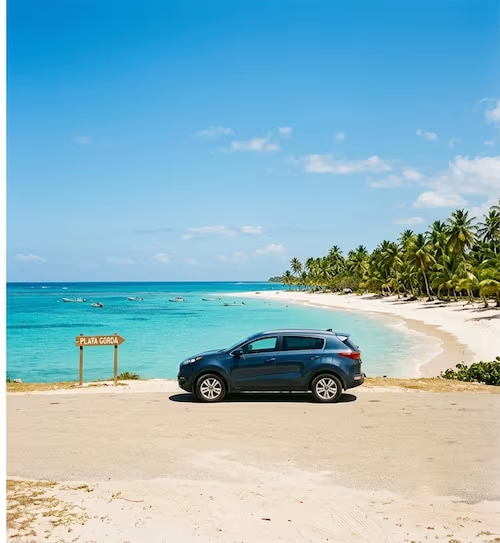
↳ What does the Dominican summer sky have in store?
Contrary to popular belief, the tropical season does not mean continuous rain. August days are very sunny and warm (around 88°F to 91°F / 31°C to 33°C). Rainfall typically takes the form of convective squalls or short showers: heavy rain concentrated into 20 to 40 minutes, usually occurring in the late afternoon, before making way for returning sunshine or pleasant, mild evenings.
↳ Microclimates, road conditions, and driving environment
The island's diverse geography creates important climate and road nuances across regions:
The East coast (Punta Cana, Bayahibe): Experiences very little rain, with brief and refreshing showers. Regarding the road network, you will drive on newly built and impeccably maintained highways like the Autovía del Coral. The pavement quality is excellent and water drains quickly, offering very comfortable driving conditions.
The North (Samaná, Puerto Plata) and the Mountainous Interior (Jarabacoa, Constanza): Feature lush vegetation thanks to more frequent late-afternoon showers. While the major highways connecting these regions (like the Autopista Duarte) are in great condition, some secondary or mountain roads may develop surface imperfections, small potholes, or tree debris following an intense shower.
These weather events simply require a quick adjustment behind the wheel: lower your speed as soon as rain slicks the asphalt, keep a solid following distance to anticipate road flaws, and take advantage of the Dominican Republic's modern highway system to travel with ease.
🛣️ 2. The 4 must-see (and safe) driving itineraries
To combine picture-perfect landscapes with driving peace of mind, here are the four best self-drive routes to explore.
| Caribbean Route | Modern, flat highway | Economy Compact
| Green Route | Winding / Mountain terrain | 4x2 SUV
| Historic Route | Urban & major corridors | Sedan
| Wild Route | Coastal / Rural dirt roads | 4x2 SUV
↳ Caribbean route: Santo Domingo → La Romana → Punta Cana
The ideal journey for travelers seeking the ultimate combination of paradise beaches, culture, and relaxation.
Depart early in the morning from Santo Domingo to avoid city traffic and take the Autovía del Este followed by the Autopista del Coral, which are among the best-maintained and most modern road infrastructures in the country. In just two hours of smooth, secure driving, you will reach La Romana. Take time for a cultural stop to visit Altos de Chavón, a magnificent re-creation of a 16th-century Mediterranean artisan village overlooking the river.
Continue toward the charming fishing village of Bayahibe, the primary departure point for memorable catamaran or speed boat excursions to the crystal-clear waters of Saona Island. Drive onward to Punta Cana, the iconic resort destination with white sand and turquoise waters. Take time to cruise its coastline, explore the wild beach of Macao (ideal for surfing or a buggy excursion), or book a relaxing day by the luxurious pools at local resorts.
Practical & local tips: Tolls are frequent and modernized along this Caribbean route; always keep cash on hand (Dominican pesos). For local travel or night outings, taxis are a practical option, but remember to agree on the fare before getting in. If you plan to visit Saona Island or book tours, reserve in advance to secure the best rates.
Recommended vehicle: Economy Compact (such as a Kia Picanto)—perfect for flat coastal highways, extremely fuel-efficient, and easy to park in cities or near the beach.
↳ Green route: Santiago → Jarabacoa → Constanza
If you prefer cool mountain air, breathtaking scenic overlooks, and ecotourism, this route through the heart of the Cibao Valley is the most impressive in the country.
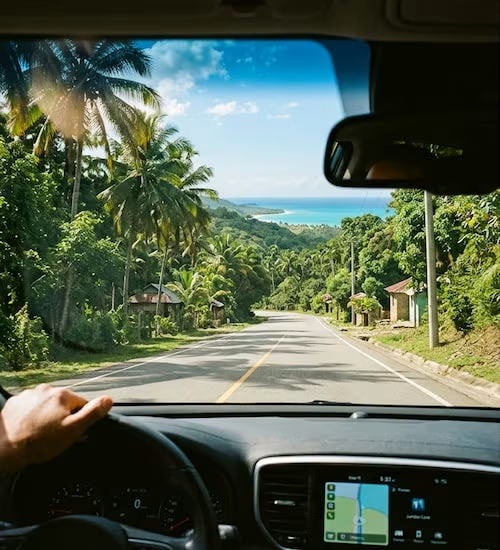
Begin your journey in Santiago de los Caballeros, the "Ciudad Corazón" (Heart City), the second-largest city in the country, before heading up into the hills toward Jarabacoa, the Dominican Republic's adventure capital. Nestled in the Cordillera Central mountain range, this region is packed with natural treasures: admire spectacular waterfalls like Salto Baiguate or try refreshing white-water rafting on the Yaque del Norte River. It also serves as a great gateway toward the famous El Limón waterfall during a northern detour, accessible via a trail winding through tropical palm forests.
From Jarabacoa, take the scenic mountain road winding toward Constanza, the "Enchanted Valley." Situated over 3,900 feet (1,200 meters) above sea level, this unique area will surprise you with its alpine-style landscapes alternating between strawberry fields, flower farms, and pine forests. Although the road is winding, the asphalt quality is excellent, and numerous natural scenic overlooks will invite you to pull over for photos.
Practical & local tips: Pack a light jacket—yes, temperatures can drop below 60°F (15°C) in the evenings in Constanza! Be sure to fill up your gas tank in Jarabacoa before heading into the mountain passes. In these elevated areas, you will frequently encounter guaguas (local minibuses) and motoconchos (motorcycle taxis); remain cautious around tight turns.
Recommended vehicle: 4x2 SUV (such as a Chevrolet Groove)—offers ideal ground clearance, excellent uphill traction, and the interior room and stability required to handle mountains comfortably.
↳ Historic route: Colonial Santo Domingo → San Cristóbal → Baní
An immersive route designed for lovers of history, culture, and authentic Dominican life.
This three-part journey starts in the heart of Santo Domingo's Colonial Zone, a UNESCO World Heritage Site and the cradle of the New World's first city founded in the late 15th century. Soak in the musical atmosphere of the cobblestone streets and centuries-old architecture.
Following this urban immersion, take the coastal route south toward San Cristóbal, the historical birthplace of the Dominican Constitution and a key location in national political heritage. Finally, end your drive in Baní, a welcoming town famous for its unique traditions: do not miss exploring the impressive Dunes of Baní (a striking desert landscape plunging directly into the Caribbean Sea), visiting the Sanctuary of Nuestra Señora de Regla, and sampling famous handmade sweet treats crafted from milk and local fruits.
Practical & local tips: For a 100% authentic experience, stop for lunch at a roadside comedor (popular local eatery) to enjoy traditional mangú (mashed plantains) served with fried cheese and salami. It is a simple, delicious, and budget-friendly meal.
Recommended vehicle: Sedan (such as a Kia Soluto)—delivers remarkable ride comfort, great city maneuverability, and a spacious trunk to easily store all your luggage.
↳ Wild route: Barahona → Bahía de las Águilas
If you are looking for an off-the-beaten-path adventure, untouched landscapes, and one of the best-kept secrets in the Caribbean, this expedition to the Southwest is made for you.
The trip begins in Barahona, the perfect launching pad to explore a region untouched by mass tourism. From here, the Enriquillo–Pedernales coastal road winds dramatically along the Caribbean Sea, offering breathtaking vistas at every turn. Your first mandatory stop is Los Patos, where the shortest freshwater river in the world empties directly onto a pebble beach—a striking contrast ideal for a refreshing swim.
Continue toward the picturesque village of San Rafael, then take a nature break at Oviedo Lagoon, an exceptional biodiversity sanctuary where you can spot pink flamingos, giant iguanas, and mangrove forests on a boat tour. The final destination is the country's crown jewel: Bahía de las Águilas, located inside Jaragua National Park. Featuring miles of pristine white sand and crystal-clear turquoise waters backed by limestone cliffs, this protected site will make you feel like you have the world to yourself.
Practical & local tips: This is a remote route: fill up on fuel and withdraw cash in Barahona before heading south toward Pedernales. Be sure to book boat tours to Bahía de las Águilas and your ecolodges in advance. If you want to extend your eco-adventure, Lake Enriquillo (a saltwater lake home to American crocodiles) is also accessible from this corridor.
Recommended vehicle: 4x2 SUV—essential for comfortably navigating beach access tracks, rural speed bumps, and occasionally rougher secondary roads.
✨ Which itinerary inspires you most? Enjoy complete peace of mind with 24/7 roadside assistance included on all our rentals [Select your ideal vehicle at Jumbo Car]
🛡️ Safety tips for traveling in the Dominican Republic in 2026
Is traveling in the Dominican Republic dangerous? As with any popular travel destination, common sense and a few basic rules ensure a smooth trip. Road safety has noticeably improved thanks to an increased presence of Tourist Police (POLITUR) and Road Safety Patrols (DIGESETT).
Here are our essential tips and warnings for the Dominican Republic:
Stick to daytime driving: Major highways are very safe during the day. However, avoid driving at night outside major highways, as street lighting can be limited and pedestrians or livestock may cross unannounced.
Anticipate speed bumps (policías acostados): These are common when entering villages. Reduce your speed as soon as you approach populated areas.
Use updated navigation apps: Waze and Google Maps work seamlessly across the Dominican Republic, offering real-time updates on roadwork and traffic slowing down.
Watch out for two-wheelers: Motorcycle taxis (motoconchos) are widespread. Keep a generous lateral distance when passing them.
Useful Emergency Numbers to Save:
National Emergency Response: 911
Roadway Safety (DIGESETT): 809-689-1000
Tourist Police (POLITUR): 809-222-2026
📋Practical checklist before driving off with Jumbo Car
To ensure a seamless and safe trip to the Dominican Republic, make sure to bring the following items when picking up your rental vehicle:
Valid driver's license: Your home driver's license is fully valid for tourist stays (up to 90 days).
Passport and credit card: Required for registration and the security deposit at the counter.
Insurance and coverage: Choose full coverage for total peace of mind, especially if you plan to explore rural roads.
Vehicle inspection: Take 5 minutes to walk around the vehicle with a Jumbo Car agent before departing (check tires, windshield wipers, fuel level).
💬 FAQ: Is it safe to travel to the Dominican Republic?
↳ Is it safe to go to the Dominican Republic?
Yes, the country welcomes millions of visitors every year under excellent conditions. Tourist regions, major highways, and city centers feature continuous police presence and updated infrastructures. By following basic safety precautions (avoiding flashy jewelry, refraining from night driving), your stay will go smoothly.
↳ How dangerous is the Dominican Republic?
The Dominican Republic is not considered a dangerous country for tourists. The majority of reported incidents involve minor opportunistic crime in non-tourist areas. By sticking to recommended routes and traveling in a reliable rental car, risks remain very low.
↳ What is the threat level in Punta Cana?
The threat level in Punta Cana is extremely low. It ranks among the safest regions in the Caribbean. The resort area, hotel zones, and surrounding highways (like the Coral Highway) are regularly patrolled by police to ensure traveler safety.
↳ What are the top tips for traveling to the Dominican Republic?
Rent a vehicle from a reputable company like Jumbo Car that offers 24/7 assistance.
Keep cash in Dominican pesos for highway tolls and local purchases.
Adjust your driving during brief summer tropical rain showers.
Avoid driving at night on secondary roads.
Every Mile Counts in 2026!
Taking a road trip in the Dominican Republic means opening yourself up to authentic encounters, untouched landscapes, and unmatched freedom of movement. Thanks to our safety tips for traveling to the Dominican Republic, you have all the keys to explore the island with total confidence.
Set your dates, choose your vehicle at Jumbo Car, and let the Dominican roads reveal their finest treasures to you!